The full story · Veronica Morera
From Psychiatric Wards to Wellness Expert
Chapter 01
Fitting In
“Your daughter is gifted,” the school said.
“We’d like to transfer her to a program for exceptional children.”
My mom barely flinched.
Gifted ran in the family. My father had been labeled the same way, then “genius” later on, but spent his life trying to blend in.
I, on the other hand, didn’t know how to fake normal.
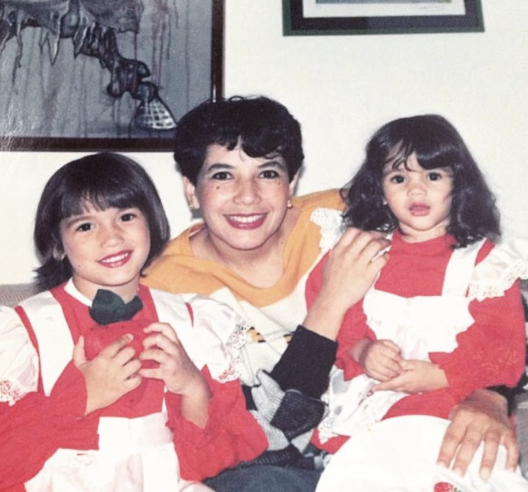
I was the weird kid who couldn’t sit through class, asked too many difficult questions, and got overwhelmed by the fluorescent lights and constant small talk. I could write and read by the age of four and would later develop theories on cell behaviour by the age of eight.
I wanted to fit in, I just didn’t know how.
However, my parents turned down the acceptance offer. They were convinced that a school full of “gifted kids” would only make my already shaky social skills worse.
Not long after, we packed up our lives in Miami, where I grew up, and moved to Venezuela, where the word gifted didn’t even exist. There, you were either “normal” or “problematic.” There was no in-between, no special programs, and no labels meant to explain why your brain worked differently. Just a quiet understanding that it was safer not to stand out.
And that’s when it happened: the first time I ever felt stupid.
In Venezuela, my Spanish was at the level of a first grader even though I was in sixth.
One day, as I stumbled to roll my tongue and read a paragraph aloud in class, the teacher let out a puff of air, as if she had been holding her breath, and said, “It’s just that you sound like Tarzan.” Everyone laughed. I didn’t want to be there. Something cracked inside me that day.
From then on, I learned a different kind of intelligence: how to disappear.
How to swallow ideas instead of saying them out loud.
How to make myself smaller in rooms that punished being different.
I still wanted to speak up, to question everything, to be heard, but I understood it was safer to blend into the noise.
Chapter 02
Lost My Mind
Going to school became a dull rhythm of “I have to do this, but I don’t know why.” The days started blending together, one gray blur of bells, teachers, and cafeteria noise.
School, which once felt like a place for curiosity, turned into the place where I was picked last for dodgeball, had no one to sit with at lunch, and started to get the message that maybe I was built broken.
So I started hanging out with the girls who locked themselves in the bathroom stall to smoke and drink, and who’d compete over who could puke more and have the tiniest waist.
Soon afterwards I started self-harming and that’s when my parents took me to a psychiatrist.
I remember the clock in the psychiatrist’s office. It would tick, making the white and cold room even more sterile. I felt even more out of place.
Why would I tell this stranger, someone who had no idea what it felt like to be me, my deepest thoughts, just so she could stamp me with a label?
This is where I learned to carry heavy words like bulimia and bipolar at thirteen, hiding them like I had been trying to hide my true self since I could remember.
I felt like there was a hole inside me, dark, endless.
Some days I wanted to pull the plug and restart the video game we call life. I could go from sleepless bursts of creativity and wild ideas about the mind to days when it felt like I had heavy chains on my ankles, dragging me underground. I was losing my footing, and it felt like the traditional medical system wasn’t helping me.
Even through the fog, I somehow made it into med school at the Universidad Central de Venezuela but opted for Nutrition and Dietetics because I couldn’t stand the idea of hospital rounds, and maybe, if I learned enough about food, I’d stop throwing it up.
After graduating, I realized that’s not what Dietitians do (cure eating disorders). So I applied to the University of British Columbia for a BA in Psychology in the hopes I could help myself in that way instead. I got in, and that’s when I imploded.
I was free from my parents’ supervision to do as I pleased. Dangerous behaviours that I once had to hide now free with nothing to stop me: mixing pills with alcohol, engaging in severe self-harm that would later leave burns and scars requiring laser treatments to heal and I would constantly fantasize about jumping off buildings or onto an oncoming train.
But then, on the other hand, I enjoyed learning. I joined the Journal Articles Club at UBC and was congratulated by professors for my theories and research in the realm of anorexia, bulimia, and psychosis.
I had also found a boyfriend, nice enough to have a good time with, and for a while that seemed like something.
But each and every day, I felt more and more like everything was fake despite following doctor’s orders. I started to forget who I was, and why I was doing any of this. There was a tug of war inside me, and the evil side won.
One day I showed up at student services and spilled everything out, as if the seams had finally burst and I could no longer hold it in. I still remember the look on her face; she was shocked by my confessions.
She immediately sent me to the school’s psychiatrist, and that’s when I was admitted to my first psychiatric ward. After that, hospital admissions and ER visits became my new normal.
I was in a cycle of high performance but breaking inside and then would need to be contained, re-drugged and then released.
I joined clubs, volunteered, got good grades, and then I didn’t. I’d disappear for weeks or months because of another hospital admission. I was even invited for an interview at Boston Medical School for graduate studies but I never made it to the interview. I was inside the ward, watched 24/7 so I wouldn’t hurt myself, escorted to exams so I wouldn’t run away.
Constantly supervised for my own safety.
After one of my attempts, I woke up in the ER, disoriented, hooked to monitors, I was almost admitted to the ICU for an overdose but I stabilized and woke up. Even though my boyfriend had taken me to the hospital, he was nowhere to be found. I called him but there was no answer. I honestly don’t remember who told me, but he did not want to be with me anymore after that. He dumped me. No call, no text, just never spoke again. It was a codependent relationship, he had been with me through multiple ER visits and this was the straw that broke the camel’s back. I felt like damaged goods.
I finished my degree and convinced myself that geography could save me. So, I left Vancouver behind, chasing a fresh start, and moved to Toronto.
Chapter 03
Meeting Mr. Right
Hospitals had become routine for me, providing both a familiar comfort and a terrifying reminder of how tired I was of fighting.
Every visit felt like being dropped back into a routine of diagnoses, more or new pills, and just trying to get rid of the suicidality enough so that I could be released but the deeper roots were never addressed. My hidden giftedness was not addressed. And I was just not being heard.
For years my chest would tighten just looking at a doctor. I remember one telling me I just needed to get a job, a good boyfriend, and something to do. Another suggested I apply for permanent housing. That was their way of saying you’re a lost cause.
So I learned to hold it together until I couldn’t. I’d keep quiet, perform well enough to pass as “fine,” and then collapse, almost drink myself to death and end up in the ER again. It was a loop: suffer in silence, perform, crash, repeat.
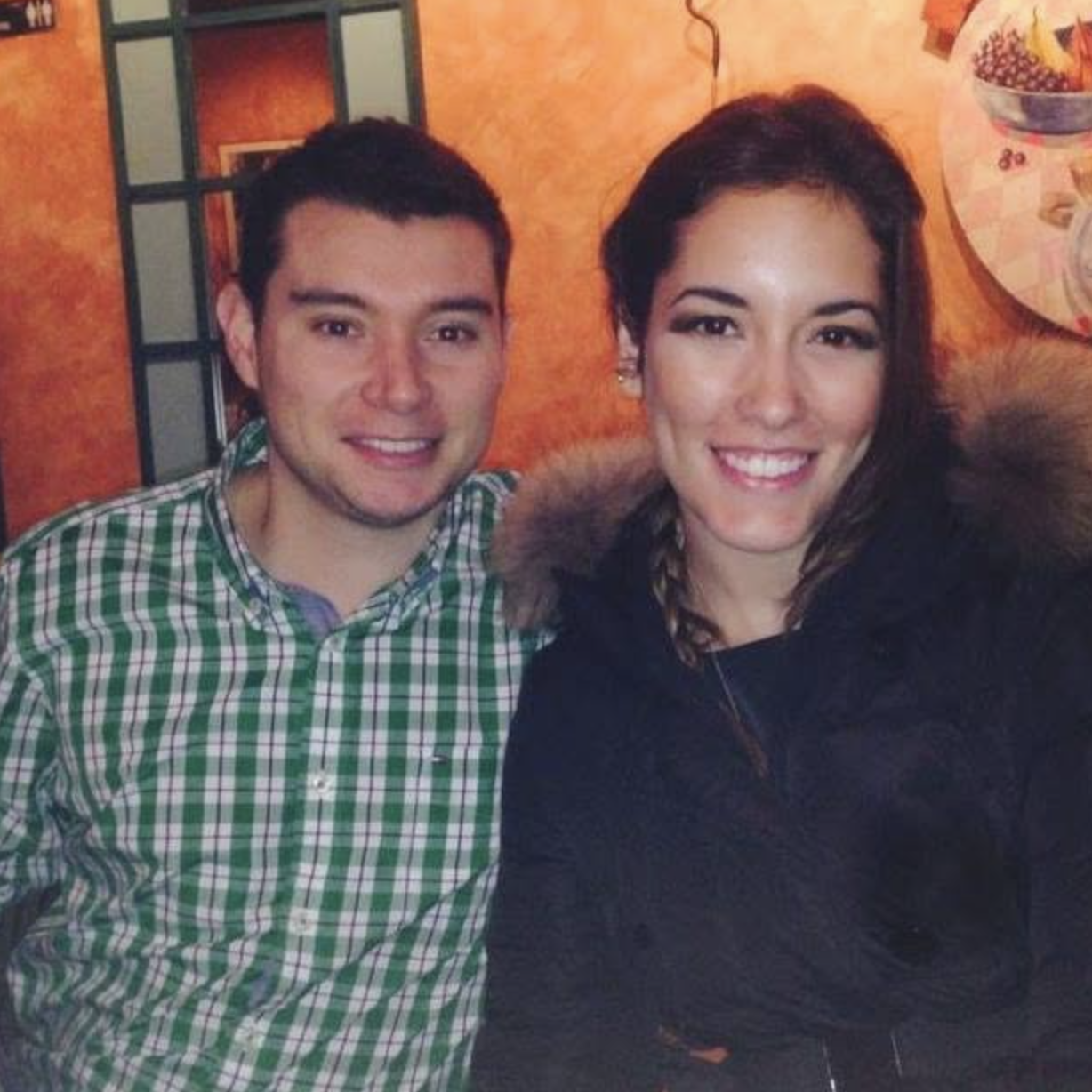
Then a friend introduced me to a Colombian that could show me around Toronto, and this would be the start of true healing.
He didn’t flinch when I told him I’d just been discharged from CAMH, or that I still had fresh scars on my arms and an active eating disorder. He wasn’t drawn to my chaos, but he didn’t run from it either.
He went to a support group for family and friends of people with bipolar disorder, but came back frustrated. “They make everyone sound fragile,” he said. “You’re not fragile. You’re fighting and you need people who believe in you.”
For the first time, someone didn’t think I was irreversibly damaged or that my brain was just wrongly wired. He also didn’t think that what I had was due to “just seeking attention”. He saw it for what it was, there was something dangerously wrong that needed immediate attention, and we had to find a path that worked.
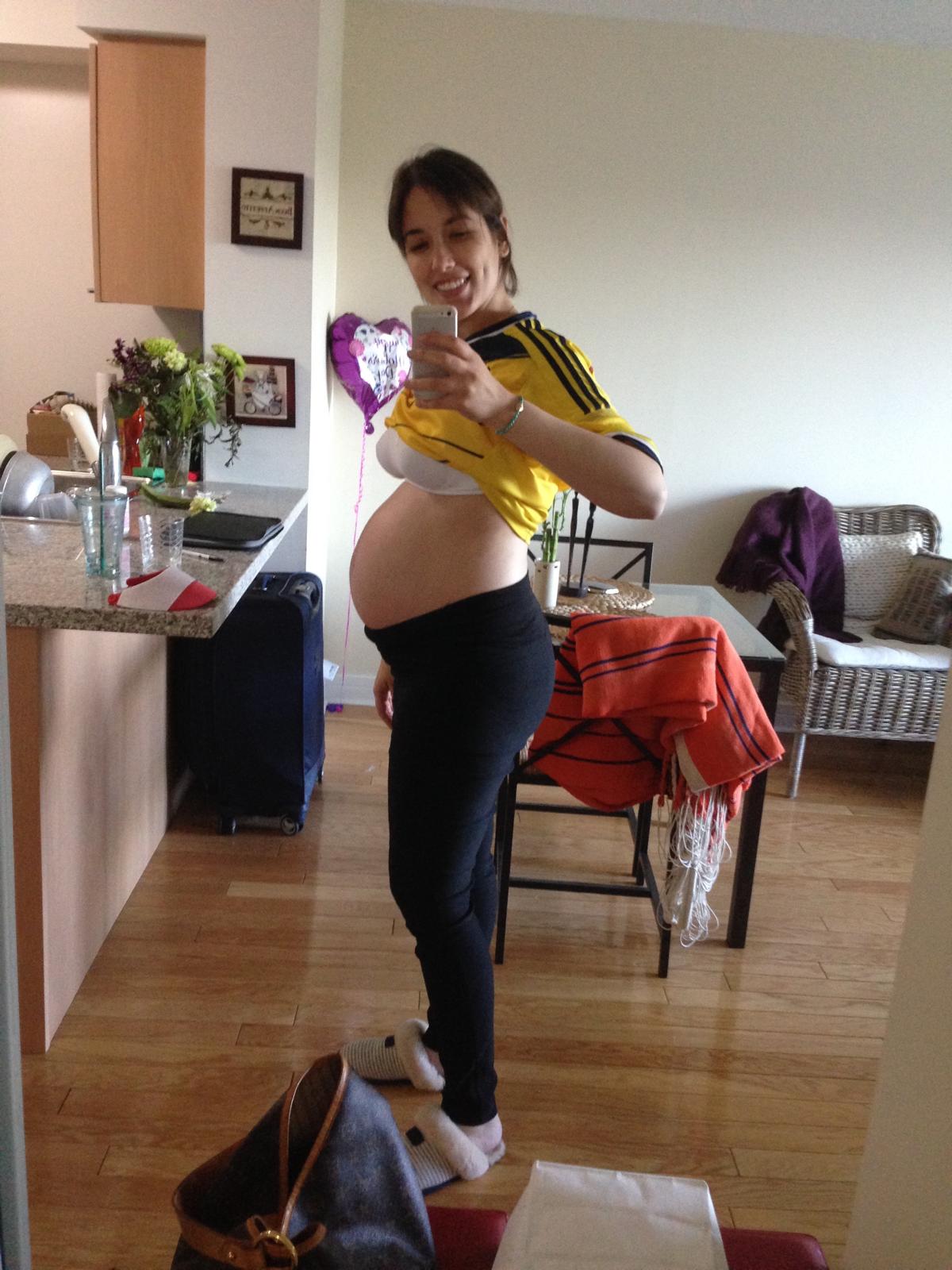
Three months later, I proposed. A few weeks after that, we found out I was pregnant.
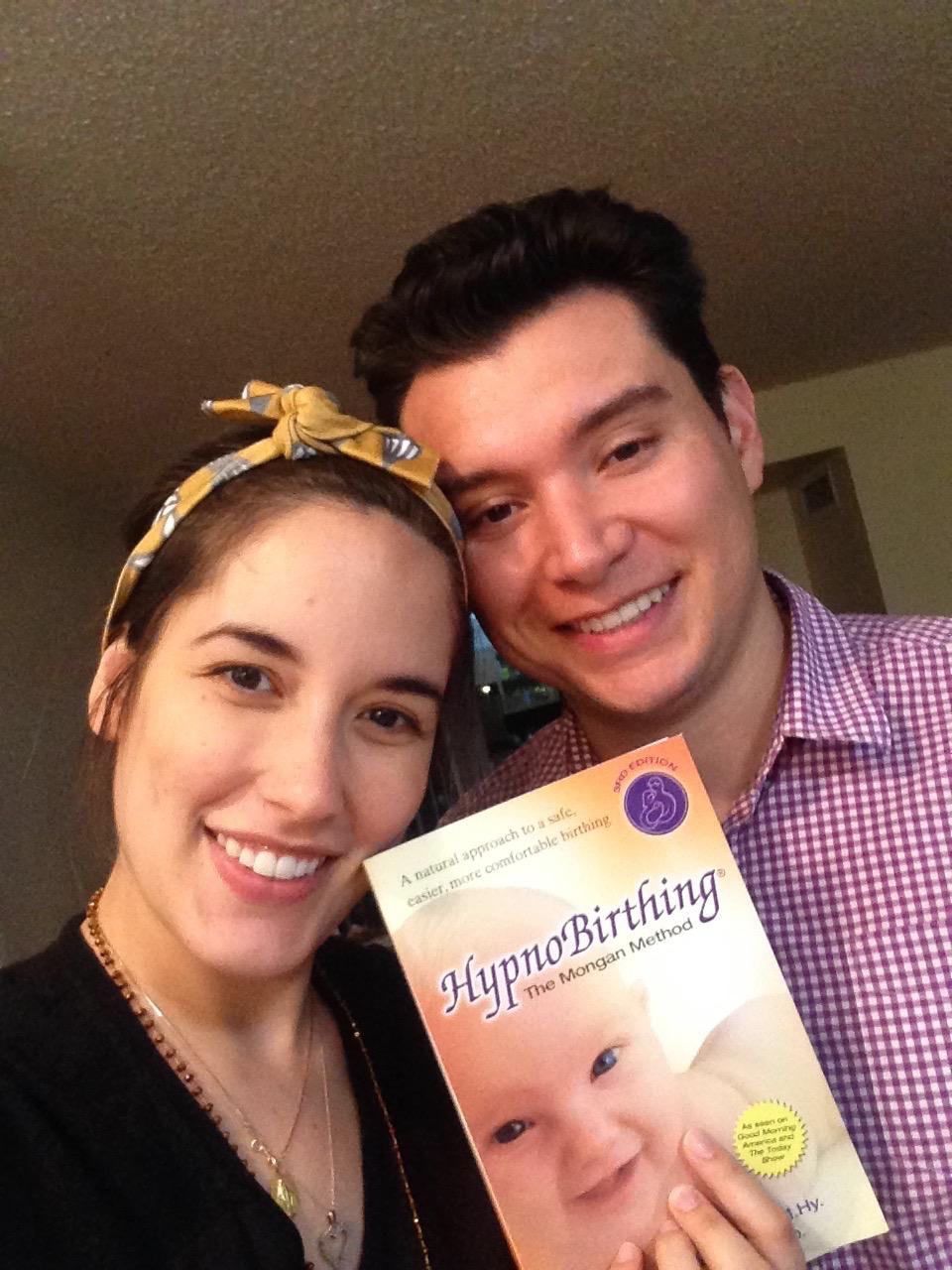
The traditional medical system was insufficient for my needs as an expecting mother that had not been stable since she was 13 years old, so I had to figure it out myself.
And that’s when everything changed, fast and brutally.
Chapter 04
The Gut-Brain Axis
I had lived with an eating disorder since I was 13 years old.
But because there were always bigger emergencies (psychosis, depression, suicidality) no one ever really addressed it. It was background noise to everything else collapsing. Treating food or body image issues felt miniscule compared to the wars happening in my mind and more like something that would resolve after I dealt with the other urgent matters.
But now I was pregnant. So for the first time, what I ate wasn’t just about me. I didn’t want my baby to be born underweight or sick, so I decided to seek help from other colleagues (nutritionists, dietitians). This would remove my own biases from treating myself and I might find someone who might see something I was missing. Most gave the usual advice about calories, meal plans, and prenatal supplements. Only one, Dr. Gabriela Pocovi, PhD in Medicine and Public Health, paused and said: “Don’t focus on calories. Heal the gut-brain.”
That sentence changed everything.
The gut–brain axis is the communication superhighway between the enteric nervous system in our intestines and the central nervous system in our brain. Ninety-five percent of serotonin, the neurotransmitter tied to mood and emotional regulation, is produced in the gut. What you eat doesn’t just feed your body; it instructs your brain. It shapes how you feel, how clearly you think, and how resilient your nervous system can be under stress.
For years I had treated my mind as if it were detached from my biology. Now, for the first time, I understood: the mind is biology.
And healing had to start from the inside out.
I decided that under medical supervision I would taper off the medication that was not helping me and would build a tribe of healthcare professionals that would focus on healing and not just masking.
Masking is something I had done since those early days in school. I was ready to find out who I truly was.
Chapter 05
The Science of Minimalism
As I began to rebuild my sense of self, I swapped calorie counting for slow mornings at the farmer’s market. I replaced punishment with presence. I surrounded myself with a powerful network of integrative and holistic healthcare professionals: naturopaths, somatic therapists, and Buddhist psychologists who spoke of impermanence, ego, and compassion in ways that didn’t feel performative.
I developed emotional regulation skills that no one had taught me before. I began to learn what safety felt like in my own body. And I finally started to understand something I had craved my entire life: the feeling of belonging, not for others, but for myself.
But healing, ironically, can be overwhelming.
Suddenly, everything felt like a new rule to follow. Every ingredient was toxic, every parenting method had a school of thought, and every decision carried the weight of this will affect your child forever. I was buried under the pressure of being a perfect mother, perfect partner, perfectly healed person.
Then one night, desperate for some kind of clarity, I watched a documentary: Minimalism.
At first, the concept felt almost offensive. I was a high performer, my entire identity was built on velocity, output, stimulation and results. I had always been busy: school, jobs, academic clubs, side hustles, parties, books, courses, being an immigrant…
Minimalism? That sounded like failure. Laziness. Empty walls. No ambition. No money. No doing. And maybe even worse: boredom.
And with my obsessive tendencies, “less” wasn’t always healthy either. Order could become compulsion. Clean could become control. I wasn’t looking for a new problem.
But true minimalism is none of that.
It wasn’t about owning 20 things or living in a white box with eucalyptus in a glass vase.
It was about removing what wasn’t mine to carry, what was built from shame and what would not accompany me to my next level.
The science of minimalism is to invest time, money and attention like you would any valuable asset, by measuring their return. Then you make them function together, not against each other, in a system that is sustainable. Each part either adds to your health and relationships, or sabotages the flow made to help you thrive in the life you want, your priorities, your sensitivities and your preferences.
It meant cleansing my mind, not just my kitchen counter.
It meant simplifying my routine to stop glorifying burnout.
It meant choosing foods, people, tasks, and ideas that gave me back energy, and cutting the ones that silently bled me dry.
Minimalism wasn’t sterile. It was sacred.
And it gave me something that I had never had before: permission to be more aligned, and to drop the pursuit to fix myself or to be perfect.
To parent with presence using the tools and abilities of that present moment and the intention to refine.
To build a life not based on how much I could do, but on how much I was willing to let go.
Chapter 06
Building a Company
Being an immigrant pregnant woman with no family nearby meant that in order for me to afford healing (nutritionists, courses, yoga, supplements) I was working at a call center, and my husband had a full-time job with a one-hour commute each way.
On Fridays, we would go to Whole Foods, which to me felt like a temple of wealth, and for date night, we’d buy one slice of pizza to share. We couldn’t afford the whole thing. Still, few things in my life have ever felt as full of promise as that warm slice. In a place where a diaper cream cost more than my hourly wage, I would whisper to myself, “One day, I’ll shop here without checking prices.”
Once the baby was born, I had no help. No childcare, no support system. That meant if I wanted to work, my income had to come from something flexible — something online.
I began teaching English to kids in China, but the hours were brutal, and the pay wasn’t enough. So while five months pregnant, I launched my first business.
I had no clue what I was doing, lacked structure and taxes seemed like a complicated math problem that I would most certainly fail at. I just opened Instagram and started posting about eating disorders, the gut-brain axis, anxiety.
I thought the internet would explode. It didn’t.
For two years I made zero sales.
So in 2017, we moved into a basement on the outskirts of Toronto.
Then my father was diagnosed with prostate cancer.
Money was tight and we weren’t able to help financially cover the costs of surgery and radiotherapy, as he is Venezuelan and I was in the process of prepping everything to sponsor them to come to Canada. So I knew there was a possibility that I would never see him again.
This lit a fire under me.
That basement felt like rock bottom.
I had to make my business work but nothing was happening.
That’s when the alcohol dreams came back.
I hadn’t had a drink in years, but I started dreaming about walking into a bar and just sniffing a shot of gin. It was so visceral I could taste it.
Alcohol had been a pivotal part of me trying to cope. Trying to drown out the voices, the fear, the hate. I felt it was a lover who harmed me but to whom I could not say no. “Just one more drink” was what I had been doing since I was 13 years old. I knew I did not know how to stop once I started drinking, and that my cycles usually became severe as soon as I took a sip.
That’s when I Googled and joined Alcoholics Anonymous.
I thought they were dramatic. I didn’t think I was that bad.
But for two months, the dreams continued. So, I went back. This time, I did the program. I went to meetings twice a day sometimes while breastfeeding. I shared. I listened. And I stopped spiraling.
AA broke my cycle.
I’ve never dreamt about alcohol again.
It gave me enough energy, hope and clarity to try again.
I started waking up at 4am to build my website (looking back, it was the ugliest website ever), to record courses while the baby slept, to study copywriting and digital marketing. At night, after my husband got home, I worked from 7pm to midnight. Every. Single. Day.
Then, Victoria Lozada, a well-known nutritionist in Spain, mentioned me as a reference in eating disorders. I gained 700 followers in one day. It was the first proof that my voice mattered.
That push led me to study customer journeys and psychology-driven sales. I re-launched a course (this time with more strategy) and made $500.
I was posting daily posts and after a couple of months I was able to fill my private practice and have a 6-month waitlist.
I was now making between $2,500 and $5,000 a month and with what my husband was also making in his fulltime job we were able to move out of the basement and into a penthouse in Leslieville, a place I once thought was reserved for other people, for another lifetime.
And now for the first time, I felt on track and it just snowballed from there.
I wrote and self-published a book that sold 250 copies in 48 hours alone and 6,000 ebooks through organic content on Instagram.
I built an online mental health school specialized in ego and neurodiversity (specially energetic and spiritual sensitivities). In a way, I created what that lost 13-year-old would have needed.
This helped individuals not only understand how their mind, emotions, and identity worked, but also how to listen to symptoms of not feeling good enough, overstimulation, and sadness, so that they wouldn’t feel victimized or trapped in a broken body, but instead could navigate it using the basis of secular Buddhism, indigenous knowledge (as I have indigenous roots from Venezuela), psychology, and the foundations of gut-brain health.
They went from overthinking and overwhelmed with the daily tasks of life to being able to regulate their emotions, meditate in order to channel their desires, and socially interact with others in a way that was authentic and open.
I also launched a paid podcast with over 600 paying members and created a virtual clinic with 10 healthcare professionals, most of whom now have their own teams.
Then, in December of 2019, I gave birth to my second child.
In 2020, as the pandemic unfolded, I found myself stripped of my regulating elements: walks, art galleries, and my community of mothers.
My body also changed, and I became larger-bodied. As I encouraged other women to practice self-compassion, some public figures began using my image as an example of “lack of discipline” or “letting yourself go.”
I made the mistake of responding, which only distracted me from my mission and invited more conflict. I realized I had fallen into a form of dysregulated activism, fueled by frustration rather than purpose, and in the process, I lost the sense of safety that Instagram had given me since 2015.
So, I deleted my account with over 50,000 followers and started again.
This time, I focused on mental health and minimalist high performance, helping others expand income, time freedom, and focus. I didn’t hide my body, but I no longer felt the need to explain it either. Instead, I lived my work: teaching through example, purpose, and alignment.
I went viral. Several times. Built a community of over 60K followers and I write daily emails on minimalism, psychology of money and mental health for high performing CEOs and founders so they can prevent or recover from burnout, anxiety or feeling lost. Thousands of people read them daily as if they were part of their routine in order to ground themselves in the habit of functional and integrative wellness.
I’ve created and sold over 100 digital programs on mental health, money psychology, and minimalist entrepreneurship and have worked with over 1,800 private clients.
I didn’t set out to build a company.
But it was inevitable.
Because deep down, this wasn’t about popularity or likes. It was about reclaiming my space. About giving that masked, gifted little girl a microphone and the freedom to finally take up space. In doing so I felt this uncontrollable urge to share it with others as well and help them regain their own voice.
Chapter 07
Rooted in Science and Soul
Minimalism, performance psychology, and nervous system regulation aren’t trends, they’re tools of liberation.
Physical and mental clutter and choices made from not feeling good enough or having to hide parts of yourself that wish to be heard reduce your brain’s ability to focus and process information, including emotions.
Instead, purpose-driven action improves neuroplasticity and long-term health. Studies from institutions like Harvard and Stanford show that when your actions align with intrinsic goals (meaning, contribution, curiosity) the brain strengthens neural pathways associated with motivation, memory, and emotional regulation.
And the gut-brain axis? It’s not just real, it’s your second brain. Gut microbiota directly influence mood, cognition, and even decision-making. A healthy gut supports focus and stress resilience; an inflamed one does the opposite.
The result is that when you declutter your mind, your environment, and your relationships, you don’t become smaller. You create space for expansion.
That’s what I did.
And if you’ve ever felt too much, too weird, too broken, or too behind, maybe you’re exactly who needs to lead.
Let your story get loud.
Let’s Connect